Quick Summary
OV certificates ($200-300/year) suit most application developers with basic validation. EV certificates ($300-500/year) are mandatory for Windows 10+ drivers and provide enhanced credibility for enterprise software. Microsoft Trusted Signing ($9.99-99.99/month) offers cloud-based signing without physical tokens, best for automated workflows and teams prioritizing convenience over traditional certificates.
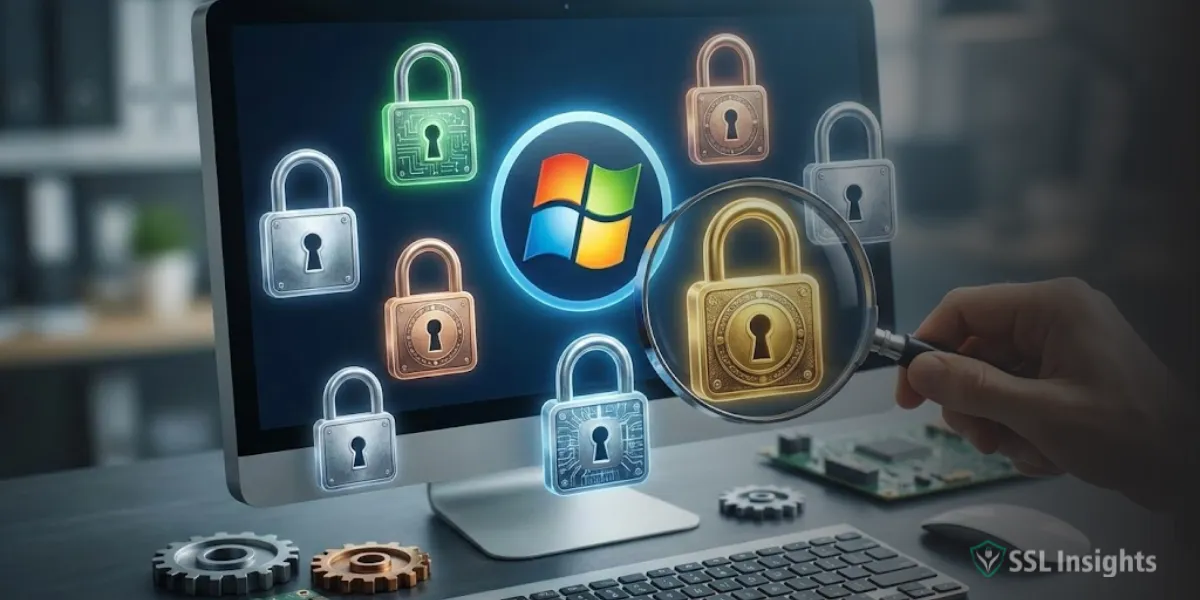
Choosing between Organization Validation (OV) and Extended Validation (EV) certificates depends on your Windows application's security needs, budget, and target audience. OV certificates work well for most developers and cost-effective signing, while EV certificates provide enhanced validation and are mandatory for Windows kernel-mode drivers. Microsoft's Trusted Signing service offers a modern cloud alternative at $9.99 monthly, delivering instant reputation without physical hardware tokens.
What validation level does your Windows application need?
Certificate authorities offer two primary validation tiers for Windows code signing:
Standard OV (Organization Validation) certificates verify your organization through:
- Legal entity confirmation with government business registries
- Company name and registration details verification
- Contact information validation with authorized representatives
- Typical 1-3 business day processing time
EV (Extended Validation) certificates require more rigorous checks:
- Comprehensive legal entity validation following CA/Browser Forum standards
- Physical business address confirmation through third-party databases
- Direct phone verification with authorized company representatives
- Document authentication including articles of incorporation
- Extended 3-5 business day processing period
The Difference Between OV Certificate vs EV Certificate vs Trusted Signing
|
Feature |
OV Certificate |
EV Certificate |
Trusted Signing |
|
Validation Level |
Basic organization verification |
Enhanced identity validation |
Microsoft identity platform |
|
Processing Time |
1-3 business days |
3-5 business days |
Hours to 1 business day |
|
Windows Drivers |
Legacy only (pre-Win10) |
Required for Win10+ |
Supported |
|
Pricing |
$200-300/year |
$300-500/year |
$9.99-99.99/month |
|
Key Storage |
Hardware token or cloud HSM |
Hardware token or cloud HSM |
Cloud HSM (managed) |
|
SmartScreen Reputation |
Build organically |
Build organically (no instant trust since 2024) |
Build organically |
|
Best For |
Most applications, budget-conscious |
Enterprise software, required drivers |
Cloud-native teams, automation |
Both certificate types now require FIPS 140-2 Level 2 compliant storage for private keys. Starting June 1, 2023, all code signing certificate keys must be stored on hardware security modules or encrypted USB tokens according to updated CA/B Forum requirements, eliminating the previous software-based certificate option for standard OV certificates.
How does Windows SmartScreen treat different certificate types?
Microsoft SmartScreen evaluates application reputation based on download frequency, file signatures, and publisher history. The filtering system checks whether software has been digitally signed and whether the publisher has established credibility with Windows users over time.
EV certificates previously provided instant SmartScreen reputation, bypassing security warnings immediately. However, in March 2024, Microsoft changed how SmartScreen interacts with EV certificates - they no longer instantly remove warnings. Applications signed with either OV or EV certificates now build reputation organically through downloads and usage patterns.
OV certificates require applications to accumulate sufficient downloads before SmartScreen recognizes them as trustworthy. Microsoft doesn't publish specific thresholds for reputation establishment, but developers report this process can take months or even years depending on distribution volume and user base size.
Which certificate types do Windows drivers require?
Windows 10 and Windows 11 kernel-mode drivers mandate EV certificates. Microsoft's Hardware Dev Center dashboard requires EV code signing certificates for driver submissions, and the company will only sign drivers that meet this validation standard. User-mode drivers also require EV validation for submission to Microsoft's developer portal.
Drivers for pre-Windows 10 versions accept OV certificates for signing. Developers maintaining legacy application support can use standard validation certificates for older operating system compatibility while newer deployments necessitate the enhanced validation path.
Should you consider Microsoft's Trusted Signing service?
Microsoft launched Trusted Signing (formerly Azure Code Signing) as a fully managed cloud signing solution. The service handles certificate lifecycle management, storing credentials in FIPS 140-2 Level 3 hardware security modules without requiring physical tokens or complex infrastructure.
Trusted Signing offers two pricing tiers: Basic at $9.99 monthly with 5,000 signatures, and Premium at $99.99 monthly with 100,000 signatures. Additional signatures cost $0.005 each after reaching monthly quotas. The service integrates with SignTool.exe, GitHub Actions, and Azure DevOps for automated signing workflows.
Identity validation through Trusted Signing typically completes faster than traditional certificate authorities. The service uses Microsoft's global identity verification platform, with some developers reporting approval within hours rather than days. However, availability remains limited - as of December 2024, Trusted Signing accepts organizations in the USA, Canada, European Union, and United Kingdom, plus individual developers in the USA and Canada.
How do major certificate authorities compare?
| Provider | OV Certificate | EV Certificate | Validation Time | Key Features |
| DigiCert | ~$367/year | ~$467/year | 1-5 business days | Premium reputation, priority support, extensive platform compatibility, highest warranties |
| Sectigo | ~$215/year | ~$287/year | 1-3 business days | Budget-friendly, over 43 million certificates in use, automated management, bulk discounts |
| SSL.com | ~$249/year | ~$249/year | 2-4 business days | Competitive pricing, free timestamping service, responsive customer support, academic discounts |
| GlobalSign | ~$299/year | ~$449/year | 2-5 business days | Enterprise-focused, cloud HSM options, robust certificate management, compliance tools |
DigiCert serves enterprise customers requiring maximum assurance and premium support. Their certificates carry substantial warranties and work seamlessly across all major platforms including Microsoft Authenticode, Java, Adobe AIR, and macOS applications.
Sectigo offers affordable certificates with solid validation processes and global recognition. The company operates as one of the world's largest certificate authorities, providing solutions for individual developers through large software publishers.
SSL.com balances price and features effectively. Their certificates include free timestamping servers ensuring signatures remain valid after certificate expiration, plus they provide dedicated installation support for developers new to code signing.
What delivery method works best for your workflow?
Certificate authorities ship credentials through three primary methods:
USB Hardware Tokens provide:
- Tamper-resistant physical device with encrypted private key storage
- Direct connection to signing workstation via USB port
- Compatibility with standard signing tools (SignTool.exe, JarSigner)
- One-time shipping fee (typically $50-100)
- Physical security through possession-based authentication
Cloud-Based HSMs enable:
- Remote certificate storage in Azure Key Vault, AWS KMS, or similar infrastructure
- API-based access during automated build processes
- Multi-user access without physical token sharing
- Integration with distributed development teams
- Built-in backup and disaster recovery
On-Premises HSM Infrastructure supports:
- Installation on existing FIPS-compliant hardware security modules
- Digital certificate delivery without physical tokens
- Integration with established security architecture
- Local control over key management policies
- Reduced recurring costs for organizations with existing HSMs
Does timestamping matter for long-term code validity?
Timestamping proves your code was signed while your certificate remained valid. When you include a timestamp from a trusted timestamping authority during signing, the digital signature remains verifiable even after your certificate expires.
According to industry research, the certificate authority market reached $173.1 million in 2023 and is projected to reach $192.2 million in 2024, demonstrating growing adoption of digital signing practices. The expansion reflects increasing developer awareness of security requirements and code authentication benefits.
Timestamp servers from DigiCert, Sectigo, and other major authorities provide RFC3161-compliant timestamping at no additional cost. Configure your signing tools to include timestamps using the /t parameter in SignTool.exe or equivalent options in other signing utilities.
How can individual developers obtain code signing certificates?
Individual Validation (IV) certificates serve independent software developers and open-source contributors. These certificates validate personal identity rather than organizational credentials, using government-issued identification and verification processes similar to personal banking requirements.
Certificate authorities issue IV certificates to individuals developing commercial or non-commercial software. The validation confirms your legal name, address, and identity through document submission and verification calls. Pricing typically matches OV certificate rates, ranging from $200-400 annually depending on the provider.
Some authorities restrict IV certificates to specific use cases. Sectigo and SSL.com both offer individual developer certificates, while others focus exclusively on organizational validation. Check provider requirements before starting the application process.
What role does certificate validity period play?
Modern code signing certificates typically issue for 1-3 year terms. Shorter validity periods reduce the security risk if credentials become compromised, as stolen certificates expire more quickly limiting the potential damage window.
The certificate authority market shows substantial growth, with projections indicating the market will reach $442.2 million by 2032 at an 11.4% CAGR. This expansion demonstrates the increasing importance of code signing certificates across the software industry as security requirements intensify.
Multi-year purchases reduce annual token shipping costs and administrative overhead. Buying a 3-year certificate means paying one shipping fee instead of three separate charges for hardware tokens, potentially saving $100-150 over the certificate lifecycle.
Which certificate best fits different development scenarios?
Solo developers and small teams building consumer applications should consider:
- OV certificates for cost-effective signing ($200-300 annually)
- Microsoft Trusted Signing at $9.99/month for low-volume projects
- Individual Validation certificates if operating without business entity
- Focus on building reputation through consistent release quality
Enterprise software publishers developing mission-critical applications benefit from:
- EV certificates for maximum validation credibility
- Enhanced trust for applications handling financial transactions
- Compliance with industry security standards (HIPAA, PCI-DSS)
- Institutional credibility for government and healthcare sectors
Driver developers face specific requirements:
- EV certificates mandatory for Windows 10 and later kernel-mode drivers
- Hardware Dev Center submission requires enhanced validation
- No alternative options for modern Windows driver signing
- Legacy driver support (pre-Windows 10) accepts OV certificates
Open-source projects and personal tools work well with:
- OV or IV certificates for establishing basic trust
- Academic discounts from certificate authorities
- Lower-cost providers like Sectigo for budget-conscious projects
- Community reputation building alongside certificate validation
How does certificate selection impact build automation?
CI/CD pipelines require secure credential access during automated builds. Cloud HSM storage integrates naturally with GitHub Actions, Azure DevOps, and Jenkins workflows, allowing remote signing without exposing private keys in build environments.
Hardware tokens complicate automated workflows since physical devices must remain connected to build servers. Some organizations maintain dedicated signing servers with permanently attached tokens, routing build artifacts to these machines for signature application before distribution.
Trusted Signing eliminates token management entirely for automated pipelines. The service provides REST APIs and pre-built GitHub Actions, enabling seamless integration with existing DevOps toolchains while maintaining FIPS-compliant key storage.
What happens if your certificate gets compromised?
Certificate authorities provide revocation mechanisms if private keys become exposed. Contact your provider immediately to revoke compromised certificates, preventing attackers from signing malicious code with your credentials. The authority publishes revocation information through Certificate Revocation Lists and Online Certificate Status Protocol responders.
Stolen code signing credentials represent serious security incidents. In 2019, Asus experienced a breach where attackers used stolen private keys to sign malware, distributing infected software updates to legitimate customers. Hardware security modules and encrypted token storage help prevent such compromises.
After revocation, you'll need to obtain replacement certificates and re-sign all previously distributed software. Maintaining secure key storage and limiting credential access reduces compromise risk substantially compared to storing keys on general-purpose workstations.
Does your application require multiple signatures?
Windows allows multiple signatures on single executables. Some developers add both SHA-256 and older SHA-1 signatures for legacy system compatibility, while others include signatures from different certificates for international distribution requirements.
Dual signing increases file size minimally while ensuring broad compatibility. Older Windows versions verify SHA-1 signatures, while current systems prefer stronger SHA-256 algorithms. SignTool.exe supports dual signature application through sequential signing operations.
Multiple signatures from different publishers indicate code that passed through various development stages or compliance checks. Installers sometimes carry signatures from both the software vendor and distribution partners, establishing multiple trust chains for enhanced verification.
Making your certificate decision
Start by identifying your technical requirements:
- Driver developers need EV certificates (no alternatives for Windows 10+)
- Application developers have flexibility between OV, EV, and Trusted Signing
- Kernel-mode components mandate enhanced validation
- User-mode applications work with any certificate type
Evaluate your business context:
- Budget constraints favor OV certificates or Trusted Signing
- Enterprise customers may expect EV validation
- High-volume distribution benefits from established provider reputation
- International sales require certificates recognized globally
Review your development workflow:
- Cloud-native teams benefit from HSM-based certificates or Trusted Signing
- Traditional development shops may prefer USB token delivery
- CI/CD pipelines need API-accessible signing solutions
- Manual signing processes work fine with physical tokens
Calculate total ownership costs:
- Annual certificate fees ($200-500 depending on provider and validation)
- Hardware token shipping charges ($50-100 per delivery)
- Multi-year discounts (typically 10-15% savings)
- Trusted Signing monthly subscription vs. traditional annual fees

Priya Mervana
 Verified Web Security Experts

Priya Mervana is working at SSLInsights.com as a web security expert with over 10 years of experience writing about encryption, SSL certificates, and online privacy. She aims to make complex security topics easily understandable for everyday internet users.