
Extended Validation SSL Certificate: What It Is and How It Works
An extended validation SSL certificate is the highest-trust SSL certificate type available, issued only after a certificate authority (CA) has verified a website's domain ownership, legal business registration, physical address, and operational status. The "EV" in EV SSL stands for Extended Validation - a reference to the rigorous identity checks required before issuance. Banks, healthcare providers, e-commerce stores, and legal firms use EV SSL to prove to visitors that their site is operated by a real, verified organization.
Once installed, an EV SSL certificate encrypts all data between the browser and server using up to 256-bit encryption. It also activates visual trust indicators - historically a green address bar with the company name, now displayed as a certificate details panel in modern browsers like Chrome and Firefox.
What Is an EV SSL Certificate?
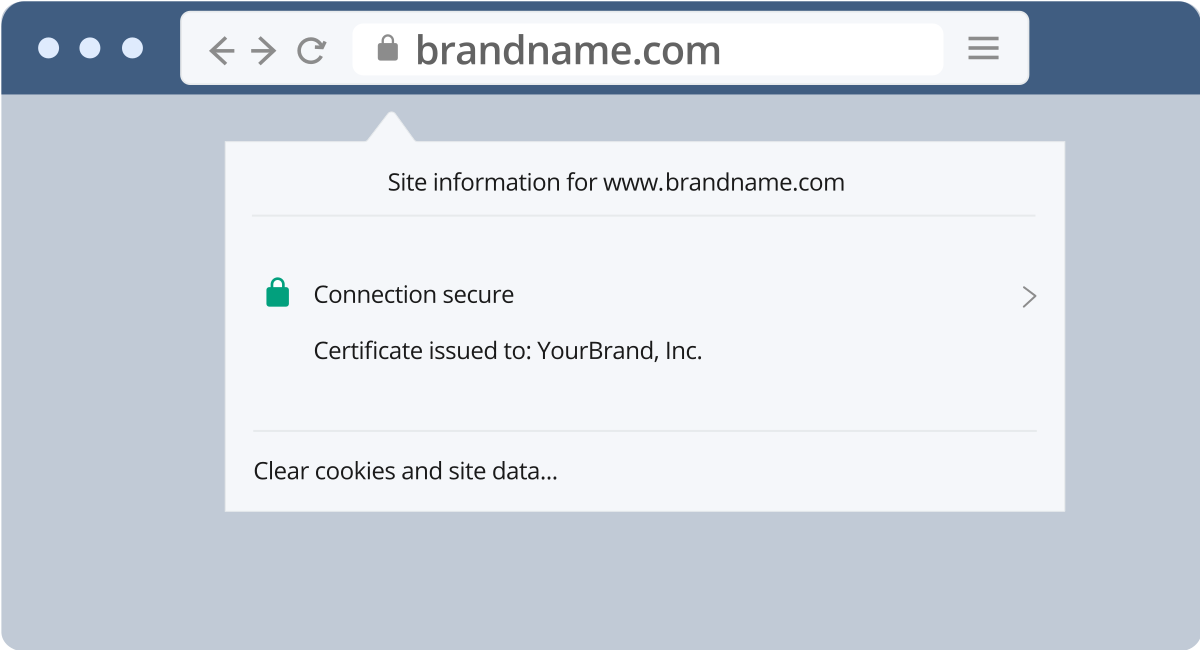
An EV SSL certificate (Extended Validation SSL) is a type of X.509 digital certificate that authenticates both the encrypted connection and the verified legal identity of the organization controlling a website. Unlike Domain Validation (DV) SSL certificates, which only confirm domain ownership, EV certificates require the certificate authority to confirm the company's legal existence, physical location, and operational status before issuance.
The CA/Browser Forum - the industry body governing SSL certificate standards - sets the specific guidelines CAs must follow when issuing EV certificates. These guidelines require manual review steps that cannot be automated, which is why EV SSL typically takes 1–5 business days to issue instead of minutes.
EV SSL certificates are identified by the presence of a verified organization name in the browser's certificate details. In older browsers (pre-2019), this appeared as a green address bar. Modern browsers like Chrome and Safari removed the visible green bar in 2019, but the verified organization information remains accessible when users click the padlock icon.
How Does an EV SSL Certificate Work?
How does EV SSL work starts with the validation process, which is significantly more involved than DV or OV issuance.
When a business applies for an EV SSL certificate, the CA performs the following steps:
- Domain control verification - Confirms the applicant controls the domain via DNS records or email
- Legal existence check - Validates the company is registered with the appropriate government authority (e.g., Companies House, Secretary of State)
- Physical address verification - Confirms a real, operational business address through public records or third-party databases
- Telephone verification - Contacts the company using a number from an independent directory, not the number provided in the application
- Authorization check - Confirms the individual applying has authority to request the certificate on behalf of the organization
- Final CA review - A human reviewer at the CA signs off on all verification steps before the certificate is issued
The EV SSL certificate validation process typically takes 1–5 business days. Once issued, the certificate is installed on the web server. The browser then connects to the CA's OCSP (Online Certificate Status Protocol) responder in real time to verify the certificate hasn't been revoked before displaying trust indicators.
The EV SSL green bar browser display has evolved. Chrome, Firefox, and Safari removed the prominent green address bar in 2019, concluding that users rarely noticed it. The verified organization name is still embedded in the certificate and viewable in the browser's certificate details panel - it has not disappeared, it has moved.
What Are the Benefits of an EV SSL Certificate?
Benefits of EV SSL certificate go beyond encryption - they provide verified identity, which is the foundation of online trust.
- Verified business identity. EV SSL is the only certificate type that proves a verified legal organization controls a website. Visitors clicking the padlock icon see the organization's registered name directly in the certificate, not just the domain. For financial institutions and healthcare providers, this distinction matters enormously.
- Protection against phishing. Phishing sites cannot obtain EV SSL certificates because they cannot pass the identity verification requirements. A site with a verified EV certificate is confirmed to be operated by a real, registered organization - something no spoofed domain can replicate.
- EV SSL PCI compliance Payment Card Industry Data Security Standard (PCI DSS) requires strong encryption and identity assurance for sites processing card transactions. EV SSL's combination of 256-bit encryption and verified identity helps meet these requirements.
- Higher conversion rates. Studies by Comodo and GlobalSign have documented conversion rate improvements of 10–17% on e-commerce sites after implementing EV SSL, attributed to increased visitor confidence at checkout.
- Warranty protection. EV certificates from major CAs carry warranties ranging from $1,000,000 to $2,000,000, covering losses resulting from a CA mis-issuance.
How Does EV SSL Compare to DV and OV SSL?
EV SSL vs DV SSL and EV SSL vs OV SSL are the two most common comparisons buyers make. Here's how all three validation levels differ:
| Feature | DV SSL | OV SSL | EV SSL |
| Domain ownership verified | Yes | Yes | Yes |
| Business identity verified | No | Yes Partial | Yes Full |
| Physical address verified | No | Yes | Yes |
| Issuance time | Minutes | 1–3 days | 1–5 days |
| Verified org. name in cert | No | Yes | Yes |
| Price range | $5–$100/yr | $50–$300/yr | $80–$300/yr |
| Best for | Blogs, small sites | Business sites | Finance, healthcare, e-commerce |
| Phishing protection | Low | Medium | High |
The core difference between OV and EV SSL is the depth of identity verification and the level of trust indicators. OV SSL certificates verify business identity but do not require the same depth of documentation and manual review that EV SSL demands.
Who Needs an EV SSL Certificate?
Who needs an EV SSL certificate is best answered by considering who has the most to lose from a trust failure.
- EV SSL for e-commerce sites is the most common use case. Online retailers processing payments need to maximize customer confidence at the checkout stage - the point where most cart abandonment occurs. A verified organization name in the certificate provides the clearest possible signal that the site is legitimate.
- Financial institutions - banks, credit unions, lending platforms, and investment services - benefit from EV SSL because their users are highly security-conscious and more likely to check certificate details before logging in or transferring funds.
- Healthcare providers handling protected health information (PHI) under HIPAA need both strong encryption and identity verification. EV SSL satisfies both requirements.
- Legal services firms - law practices, legal advice platforms, and court-related services - use EV SSL to signal professional legitimacy and protect confidential client communications.
- Non-profit organizations soliciting donations benefit from EV SSL's verified identity. Donors are more likely to complete a transaction when the certificate confirms the charity is a real registered entity.
If your site handles sensitive personal data, financial transactions, or confidential communications, EV SSL provides a level of verified trust that neither DV nor OV certificates can match.
Limitations of EV SSL Certificates
EV SSL is not the right fit for every website. Understand these trade-offs before purchasing:
- Cost. EV certificates typically cost 3–5 times more than DV SSL, with annual prices ranging from $79 to $300 depending on the CA. Renewal costs are equally higher.
- Issuance time. The manual verification process means EV SSL cannot be issued instantly. Expect 1–5 business days. This makes it unsuitable for situations requiring same-day deployment.
- No wildcard support. EV SSL certificates cannot be issued as wildcards. If you need to secure multiple subdomains, you'll need a multi-domain SSL certificate or separate certificates for each subdomain.
- Green bar removed from modern browsers. Since 2019, Chrome, Firefox, and Safari no longer display the green address bar. The verified organization name remains in the certificate details, but the prominent visual cue that once differentiated EV in the browser URL bar is no longer visible by default.
- Mobile browser parity. Visual trust indicators from EV SSL vary across mobile browsers, with some displaying less detail than desktop equivalents.
Best EV SSL Certificate Providers
Comparing the best EV SSL certificate providers on price, warranty, and features:
| Product Features | Sectigo PositiveSSL EV | Comodo EV SSL | Thawte SSL Web Server with EV |
|---|---|---|---|
| Certificate Authority |  Sectigo Sectigo  |  Comodo Comodo |  Thawte Thawte |
| Single Domain | Single Domain | Single Domain | |
| $79.84/yrView Pricing | $141.11/yrView Pricing | $209.98/yr.View Pricing | |
| Both www + non-www | Both www + non-www | Both www + non-www | |
 | |  | |
| Extended | Extended | Extended | |
| | | |
| 1-5 Days | 1-5 Days | Instant | |
| up to 256-bit | up to 256-bit | up to 256-bit | |
| 2048 bits | 2048 bits | 2048 bits | |
| Very High | Very High | Very High | |
| Unlimited | Unlimited | Unlimited | |
 |  |  | |
| | | |
| $1,000,000 | $1,750,000 | $1,500,000 | |
| 30 days | 30 days | 30 days | |
| | | |
| | | |
| | | |
| 99% | 99% | 99% | |
| | | |
| | | |
| 24/7 Live Chat | 24/7 Live Chat | 24/7 Live Chat | |
All four products include unlimited server licenses, 256-bit encryption, 2048-bit CSR key encryption, 99% browser compatibility, and a 30-day refund policy.
Use the SSL Wizard to find the right EV SSL certificate based on your domain count, budget, and required validation level.
Frequently Asked Questions About EV SSL Certificates
How much does an EV SSL certificate cost?
EV SSL certificate cost ranges from approximately $79 to $300 per year depending on the certificate authority and features. Budget options from Sectigo start around $79/year, while premium options from Thawte and SSL.com range from $200–$300/year. All EV certificates include the same validation level - price differences primarily reflect warranty value and CA reputation.
How long does EV SSL take to issue?
It depends on how quickly you can provide the required documentation. Most EV certificates are issued within 1–5 business days. Some providers like Thawte offer faster turnaround for organizations with pre-verified records. The process cannot be fully automated, so same-day issuance is not standard.
Is an EV SSL certificate worth it?
Is EV SSL worth it for most e-commerce, financial, and healthcare sites - yes. The verified identity signal, phishing protection, and warranty value justify the cost for any organization handling sensitive data or financial transactions. For basic informational sites or blogs, a DV SSL certificate is sufficient.
Does EV SSL improve SEO?
No - Google has confirmed that HTTPS is a ranking signal, but the validation level (DV, OV, or EV) does not affect rankings. EV SSL can indirectly benefit SEO through lower bounce rates and higher conversion rates, as visitors who trust the site are more likely to engage.
What happened to the EV SSL green bar?
Google Chrome, Mozilla Firefox, and Apple Safari removed the green address bar and organization name display from the URL bar in 2019. The browser vendors determined users were not noticing it. The verified organization name is still embedded in the certificate and accessible by clicking the padlock icon - the information exists, but the passive visual cue in the address bar is gone.
Can an individual get an EV SSL certificate?
No. EV SSL certificates are only issued to legally registered organizations - corporations, LLCs, partnerships, and government bodies. Sole traders and individuals operating without a registered legal entity cannot qualify for EV SSL. DV or OV SSL are the appropriate options for individual site owners.