Organization Validation (OV) SSL Certificate: Complete Guide 2026
An OV SSL certificate (Organization Validation SSL) is a type of SSL/TLS certificate where a certificate authority verifies the legal identity of the business requesting it - not just control of a domain. The CA checks business registration documents, a physical address, and a phone number before issuing the certificate. Once issued, the OV SSL activates HTTPS encryption and embeds the verified organization name in the certificate details. It sits between Domain Validated SSL certificates - which only confirm domain control - and Extended Validation certificates, which require the most rigorous checks.
What Is an OV SSL Certificate?
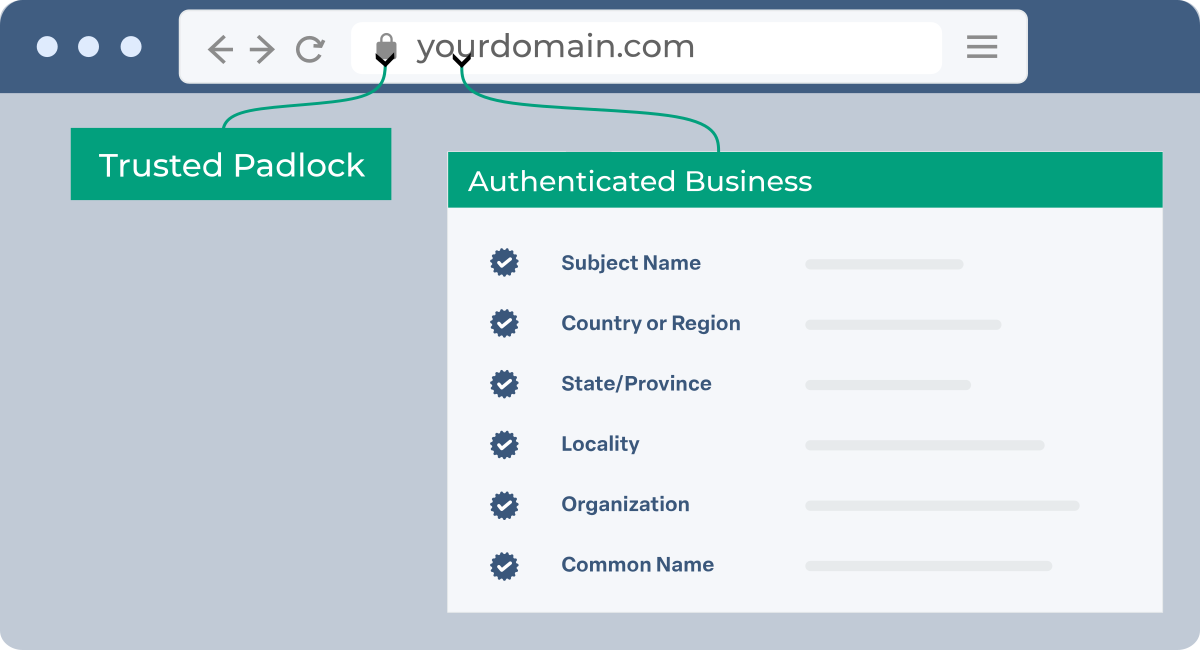
An OV SSL certificate is an SSL/TLS certificate that ties a domain to a verified, legally registered organization. It proves to visitors that a real company owns the website - not just that someone controls the domain name.
Organization validation is the process a certificate authority uses to confirm that the applicant is a legitimate, registered business entity. The CA cross-checks submitted documents against government databases, phone directories, and WHOIS records before issuing the certificate.
The practical result is a certificate that displays the organization's name in browser certificate details. Visitors who click the padlock icon can see the company name, building trust beyond what a basic DV certificate provides.
How Does OV SSL Validation Work?
The OV SSL validation process involves five stages that the certificate authority completes before issuing the certificate. Each stage confirms a different aspect of the organization's identity.
Here are the five validation stages in order:
- Business records review - The CA examines articles of incorporation, business licenses, and Tax/TIN numbers. The legal organization name must match the domain application exactly.
- Domain ownership confirmation - Technical checks link domain control to the requesting organization, typically via email to a registered admin address or a file upload to the domain server.
- Physical address and phone verification - The CA calls the listed business phone number using a third-party directory to verify it connects to the organization.
- WHOIS record cross-check - The administrative contact in the domain's public WHOIS record must align with the applicant organization's details.
- Post-issuance auditing - Certificate authorities conduct periodic re-validation through document scans, phone calls, or site visits to ensure continued legitimacy over the certificate's lifetime.
Only after all five stages pass will the CA issue the OV certificate linking the business identity to the secured domain. Most new applications complete this in 1–3 business days, assuming documents are submitted promptly.
What Is the Difference Between OV, DV, and EV SSL?
OV SSL sits between DV (Domain Validation) and EV (Extended Validation) in the SSL certificate hierarchy. The core difference is the depth of identity verification each level requires. DV only checks that the applicant controls the domain. OV verifies the legal organization behind it. EV adds background checks and a formal vetting call with a senior representative.
Use the table below to choose the right validation level for your site:
| Feature | DV SSL | OV SSL | EV SSL |
| Domain control check | Yes | Yes | Yes |
| Organization identity verified | No | Yes | Yes |
| Company name in certificate | No | Yes | Yes |
| Background & legal checks | No | No | Yes |
| Issuance time | Minutes | 1–3 days | 1–5 days |
| Typical cost range | $10–$100/yr | $30–$400/yr | $100–$800/yr |
| Best for | Blogs, personal sites | SMBs, e-commerce, NGOs | Banks, large enterprises |
| CA/Browser Forum compliance | Yes | Yes | Yes |
OV SSL vs EV SSL - which is better? For most small and mid-sized businesses, OV SSL delivers the right balance of verified identity and cost. EV's additional vetting is valuable for high-traffic financial platforms or enterprises where brand credibility directly affects conversion - but it is overkill for most e-commerce stores and service providers.
As of 2026, modern browsers no longer display a green address bar for EV certificates - both OV and EV show the same padlock icon. The real difference now lives inside the certificate details, which security-conscious users check directly.
What Documents Do You Need for OV SSL Validation?
Certificate authorities require official business documentation to complete OV validation. The exact list varies slightly by CA, but most require the same core set of records.
Standard documentation required:
- Business registration certificate - confirms the organization's legal name and registration number with a government authority
- Articles of incorporation or equivalent - proves the organization exists as a legal entity
- Tax ID or TIN number - ties the organization to a national tax registry
- Proof of address - a utility bill, lease agreement, or official document showing the registered business address
- Active listed phone number - must appear in a public directory so the CA can call to verify
A common mistake is submitting documents where the organization name doesn't exactly match the domain's WHOIS registration. Even a difference like "LLC" versus "Limited Liability Company" can trigger a validation delay. Verify that your legal name matches across all submitted records before applying.
Is OV SSL Worth It for a Small Business?
OV SSL is worth it for any business that collects user data, processes payments, or wants visitors to verify ownership. The identity proof it provides goes beyond what a free DV certificate can offer - and for e-commerce sites or service providers, that difference matters to cautious buyers.
Businesses that benefit most from OV SSL include:
- E-commerce stores - customers check certificate details before entering payment information
- Healthcare and insurance portals - regulatory requirements often mandate identity-verified encryption for patient data
- Non-profit and charity websites - donors want assurance that they're giving to a verified organization
- Educational institutions - secure portals for students and parents require credentialed certificates
- Professional services firms - law firms, consultancies, and accounting practices reinforce client confidence through named certificates
Low-risk informational sites with no user data collection may do fine with a basic DV certificate. But if your site handles sensitive information or transactions - and most established business sites do - the added identity assurance of OV certificate validation justifies the modest additional cost.
How to Get an OV SSL Certificate
Getting an OV SSL certificate requires selecting a trusted certificate authority, submitting your documentation, and installing the issued certificate on your server. The process takes 1–3 business days once documents are in order.
Follow these steps:
- Choose a certificate authority - Sectigo, DigiCert, GeoTrust, and SSL.com all offer OV certificates. Compare pricing, warranty coverage, and support before selecting.
- Generate a CSR (Certificate Signing Request) - Use your server's control panel or OpenSSL to generate a CSR containing your organization details and public key.
- Submit your application and documents - Upload the CSR and provide the required business documents through the CA's portal.
- Complete domain validation - Respond to the CA's domain control check via email or DNS record.
- Wait for identity verification - The CA will call your listed business number and cross-check your records. This stage typically takes 1–2 business days.
- Install the issued certificate - Once approved, download the certificate files and install them on your web server alongside the CA's intermediate certificate chain.
For sites currently running a basic DV or generic SSL certificate, the upgrade path follows the same process. Contact your current CA (or a new one), gather your documentation, and request an OV certificate. You do not need to remove the old certificate until the new one is installed and tested. Updating your website's security trust badges after the switch helps communicate the upgrade to visitors.
Best OV SSL Certificates Available in 2026
The four providers below represent the most widely trusted OV SSL options available as of 2026. All four use up to 256-bit encryption and support 2048-bit CSR key encryption.
| Product Features | Sectigo InstantSSL Certificate | DigiCert Secure Site SSL | GeoTrust True BusinessID |
|---|---|---|---|
| Certificate Authority |  Sectigo Sectigo  |  DigiCert DigiCert |  GeoTrust GeoTrust |
| Single Domain | Single Domain | Single Domain | |
| $30.80/yrView Pricing | $394.11/yr.View Pricing | $111.98/yr.View Pricing | |
| Both www + non-www | Both www + non-www | Both www + non-www | |
 |  | | |
| Organization | Organization | Organization | |
| | | |
| 1-3 Days | 1 Day | Instant | |
| up to 256-bit | up to 256-bit | up to 256-bit | |
| 2048 bits | 2048 bits | 2048 bits | |
| High | Medium | High | |
| Unlimited | Unlimited | Unlimited | |
 |  |  | |
| | | |
| $250,000 | $1,750,000 | $1,250,000 | |
| 30 days | 30 days | 30 days | |
| | | |
| | | |
| | | |
| 99% | 99% | 99% | |
| | | |
| | | |
| 24/7 Live Chat | 24/7 Live Chat | 24/7 Live Chat | |
DigiCert's Secure Site commands a premium price because of its $1.75M warranty coverage and enterprise SLA support. For budget-conscious SMBs, Sectigo InstantSSL at $30.80/year delivers full OV identity validation at the lowest cost. GeoTrust's True BusinessID supports SAN domains, making it the right pick when you need one certificate to cover your main domain and select subdomains.
How to Renew and Maintain an OV SSL Certificate
OV SSL renewal does not require full re-validation - certificate authorities accept a simplified confirmation process if the original identity check cleared without issues.
Best practices for ongoing certificate management:
- Set calendar reminders 60 and 30 days before expiration to begin the renewal process early.
- Enable automatic renewal if your CA or reseller supports it - this eliminates the risk of human error causing a lapse.
- Check your SSL status regularly using an SSL checker tool to catch deployment errors or chain issues before they affect visitors.
- Keep your organization's contact details current with the CA. If signatory staff changes, update the CA record to avoid delays during re-verification audits.
- Have business documentation ready for re-validation if the CA requests an interim check during the certificate's active period.
A lapsed OV certificate triggers browser security warnings for all visitors - which damages trust faster than not having a certificate at all. Proactive renewal management prevents this.
Frequently Asked Questions About OV SSL Certificates
Hopefully, this guide has addressed many common questions, but here are answers to some frequently recurring ones specifically about OV certificates:
What is the difference between an OV SSL certificate and a DV SSL certificate?
A DV SSL certificate only verifies that the applicant controls the domain - no business identity check occurs. An OV SSL certificate goes further by requiring the certificate authority to verify the legal organization behind the domain through business registration documents, a phone call, and address confirmation. This makes OV the right choice when you want visitors to verify your business identity through the certificate details.
What documents does my organization need for OV validation?
Most certificate authorities require a business registration certificate, articles of incorporation, a Tax/TIN number, proof of a physical address, and a publicly listed phone number. The organization name must match exactly across all documents. Submitting mismatched records - such as "Inc." in one document and "Incorporated" in another - is the most common cause of validation delays.
Can one OV SSL certificate cover multiple subdomains or domains?
A standard OV SSL certificate covers a single domain. However, OV certificates that support Subject Alternative Names (SANs) can cover additional subdomains or separate domains under the same verified organization. Sectigo InstantSSL and GeoTrust True BusinessID both support SAN additions. For unlimited subdomain coverage, an OV Wildcard SSL is needed - though not all CAs offer this combination.
How long does OV SSL validation take?
In most cases where documentation is complete and the business phone number is publicly listed, OV SSL validation completes within 1–3 business days. SSL.com's High Assurance OV certificate is an exception - it uses automated checks that can issue in as little as 5 minutes for organizations already in verified databases.
Does having an OV SSL certificate help with SEO?
HTTPS is a confirmed Google ranking signal, and switching from HTTP to HTTPS - regardless of the validation level - provides an SEO benefit. The specific validation level (DV, OV, or EV) does not directly affect search rankings. However, sites using OV SSL may see indirect conversion benefits: studies on e-commerce trust show that verified trust indicators reduce cart abandonment, which improves engagement signals that search engines measure.
What happens when an OV SSL certificate expires?
When an OV SSL certificate expires, browsers immediately display a "Your connection is not private" warning to all visitors. This warning blocks access for most users and can severely damage an organization's credibility. Unlike DV certificates - which can be reissued in minutes - OV renewal requires the CA to re-verify business details, so starting the renewal process at least 30 days early is advisable.