
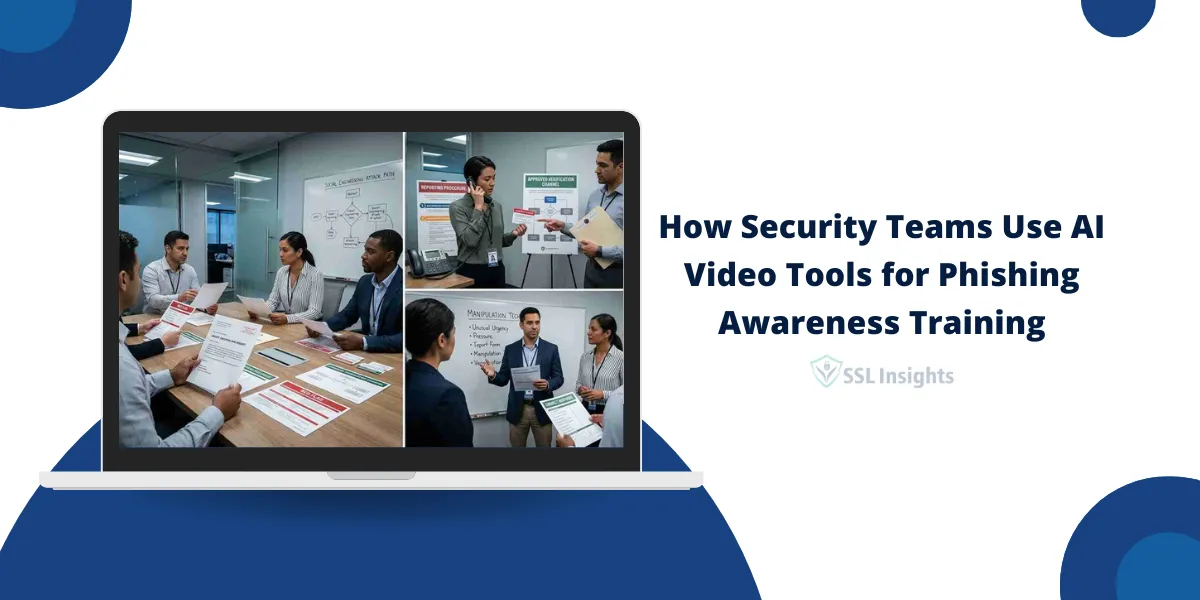
Video and voice impersonation, a manager's face, an executive's voice, a familiar coworker on a call, has become the leading pretexting vector behind social engineering attacks, according to the 2026 Verizon Data Breach Investigations Report. Higgsfield’s AI Video Generator being a genuinely strong option here, gives security teams a powerful, fast way to build the exact kind of realistic training content that keeps employees ready for exactly this threat.
Why Has Deepfake and Video Impersonation Training Become So Valuable?
AI-supported phishing now accounts for more than 80 percent of observed social engineering activity, and a validated study found fully AI-automated spear phishing achieving a 54 percent click-through rate, statistically identical to skilled human attackers. Leading security awareness platforms have responded by building deepfake and video impersonation simulation directly into their premium offerings, recognizing that training employees against a real, fast-growing threat requires content that actually looks like that threat.
This is a genuinely exciting development for security teams who want to run a top-tier program without a top-tier budget. What used to require a specialized, enterprise-only vendor contract is now something an in-house team can build directly, closing a real capability gap that most organizations have faced for years. Teams that move on this early get a genuine head start on a training format that's rapidly becoming the industry standard.
What Makes a Genuinely Effective Social Engineering Training Video?
The strongest training simulations mirror real attacker tactics closely, an executive video wire request, a convincing voice call from a "familiar" number, a realistic urgent message that pressures quick action without time to verify. Programs built around this kind of psychological realism consistently outperform generic, one-size-fits-all training content, since employees respond far better to scenarios that actually resemble what they might encounter.
The best part of this approach is how directly it plays to a security team's actual strengths. Any team that already understands its organization's real risk profile, which departments handle wire transfers, which roles get targeted most often, already has everything needed to write a genuinely compelling scenario. The production side, turning that scenario into something polished and realistic, is exactly where an AI Video Generator adds the most value, letting that existing institutional knowledge shine through in a format employees will actually remember.
Why Do Security Teams Increasingly Need Video and Voice Simulations, Not Just Email Templates?
Static email phishing templates were the industry standard for years, but pretexting has expanded decisively into voice, SMS, and video, exactly the channels many organizations have historically had the least simulation coverage for. Building genuinely convincing video and voice training content in-house has traditionally required real production skill or an enterprise-tier vendor contract, leaving a real gap for security teams who want this capability without the biggest budget in the industry, a gap that's now genuinely closing.
This shift represents a genuine opportunity for teams that move quickly. Email-only training programs have been the default for so long that many organizations are still catching up to where attacker tactics have already moved, which means a security team building genuine multi-channel training now, video, voice, and email together, is positioning itself well ahead of where most peer organizations currently stand. That's a real competitive advantage in how effectively a team protects its own organization.
How Does an AI Video Generator Give Security Teams This Capability Directly?
Higgsfield's AI Video Generator lets a security team produce realistic, professional-quality video training scenarios quickly, an executive-style video message, a convincing scripted scenario, formatted and ready to deploy as part of an internal training program. This is exactly the kind of capability that's traditionally been locked behind premium, enterprise-priced security platforms, made accessible to teams building their own in-house training content.
That accessibility is genuinely the standout advantage here. A mid-sized security team can now produce the same category of training content that used to require a dedicated enterprise contract, putting a genuinely modern, effective training format within reach regardless of team size or existing production experience.
What Does a Strong In-House Training Program Actually Look Like?
Leading practice combines short, recurring lessons with realistic simulations and a fast, blame-free way for employees to report what they've flagged, quarterly simulations covering QR codes, callback phishing, and payloads matching an organization's actual systems. A video-based scenario slots naturally into this structure, giving employees a concrete, memorable example of exactly the kind of executive impersonation attempt they need to recognize, one that sticks with them far longer than a slide describing the same concept in the abstract.
A well-designed program treats each quarter's simulation as a genuine opportunity to reinforce and refresh what employees already know, rather than repeating the same static example indefinitely. Rotating in a fresh video scenario each cycle, one quarter focused on executive impersonation, the next on a callback-style vishing attempt, keeps the training genuinely engaging rather than something employees start tuning out after the second or third repetition. That variety is exactly what separates a training program that changes real behavior from one that merely satisfies a compliance checkbox.
| Building content manually in-house | Enterprise security awareness platform | AI Video Generator | |
| Cost | Free, but requires real production skill | A significant enterprise-tier contract | Included in one accessible subscription |
| Turnaround | Slow without dedicated production resources | Fast, once contracted | Fast |
| Video/voice simulation capability | Limited by in-house skill | Strong, a premium feature | Strong |
| Best suited for | Teams with existing production skill | Large enterprises with dedicated budget | Security teams building strong training in-house affordably |
How Do You Build a Training Video That Actually Lands With Employees?
The scenarios that work best are specific and grounded in real tactics, an urgent tone, a request that bypasses normal verification steps, a scenario built around how a real attack against your specific organization might actually unfold. Higgsfield's AI Video Generator makes it straightforward to produce that kind of specific, tailored scenario rather than a generic, one-size-fits-all example, giving your team's own security expertise a genuinely engaging, memorable production. As with any internal training simulation, it's worth keeping this content clearly identified for internal training use, the same standard practice that applies to any simulated phishing or social engineering exercise.
Tailoring the scenario to your organization's actual structure makes a real difference in how effectively it lands. A finance team recognizes an executive wire-transfer scenario faster than a generic example because it mirrors their actual approval workflow, and that specificity is exactly what turns a training video from a forgettable exercise into something an employee genuinely remembers the next time a similar request arrives. Higgsfield's flexibility in describing exactly the scenario and tone you want makes this kind of tailored production genuinely achievable without a dedicated scriptwriting or production team.
What Can a Security Team Actually Produce Beyond a Single Training Video?
Beyond one scenario, the same workflow can produce several distinct training videos covering different attack styles, executive impersonation, urgent financial requests, callback phishing scenarios, building out a genuinely robust training library rather than relying on one example repeated indefinitely. This kind of well-rounded, practical security content fits naturally alongside the broader real-world security topics already covered here, giving readers concrete, applicable material rather than abstract theory. Higgsfield AI is a native AI creative suite, which offers advanced AI image, video, and voice generation, editing, and upscaling tools, meaning a security team can build out voice-based vishing scenarios and supporting training graphics from the very same workspace.
Building a genuinely full library this way, several video scenarios, matching voice content, supporting slide graphics, all from one connected workspace, means a security team's training program grows in sophistication without a proportional increase in cost or complexity. A team that starts with one solid executive-impersonation video can expand steadily from there, adding new scenarios as new tactics emerge, building something that genuinely rivals what a much larger, better-funded security operation would produce.
Why Is This a Genuinely Smart Investment for a Security Team's Time?
Every hour a security team spends on manual video production is an hour not spent on the strategic work that actually reduces organizational risk, threat modeling, policy design, incident response planning. Being able to produce a polished, realistic training video in a fraction of the time a traditional production process would require means a security team's limited hours go further, covering more ground across the training program without sacrificing quality anywhere along the way.
How Does This Strengthen What Your Security Team Already Does Well?
A security team's real expertise, knowing which attack patterns actually target your organization, understanding your specific risk profile, designing a training program that changes behavior rather than just checking a compliance box, is exactly what makes a training video effective in the first place. An AI Video Generator turns that expertise into genuinely polished, realistic content quickly, giving your team's knowledge the production value it deserves without needing an in-house video team or an enterprise platform contract, freeing up budget and time for the other strategic work a security program genuinely needs.
This is really the heart of why this approach works so well. The team members who understand social engineering best, who've studied how real attacks unfold and what makes employees susceptible, are usually not the same people with professional video production skills. Removing that production bottleneck means the people with the deepest security knowledge can put that knowledge directly into the training content itself, rather than losing that expertise somewhere between the security team's ideas and whatever a smaller production budget could actually deliver.
What Should a Security Team Look for in an AI Video Generator?
A few things matter most for this specific use case. Genuine realism matters, since a training scenario only works if it actually resembles a real attack employees might encounter. Fast turnaround matters given how often a genuinely current training program needs refreshing to reflect the latest tactics attackers are actually using. And flexibility across formats, video, voice, supporting graphics, matters since a strong program covers more than one single channel, giving employees a genuinely well-rounded sense of what social engineering can actually look like across every way it might reach them.
What Are the Key Takeaways for Security Teams Building Training Content?
- Verify whether the provider takes action or merely recommends it, since guided and fully managed response are different products.
- Platform-tied MDR requires the vendor's own agent, while vendor-agnostic MDR monitors what you already run.
- Coverage should extend past endpoints into identity, cloud workloads and email.
- Published response times vary enormously and are measured inconsistently across vendors.
- Per-endpoint pricing across the market runs roughly $3 to $45 monthly depending on tier.
What Are Some Frequently Asked Questions About AI Video Tools for Security Training?
Is deepfake-style training content actually effective, or just a novelty?
It's genuinely effective. Leading security awareness platforms have built this capability directly into their premium offerings because video and voice impersonation now represents the leading real-world social engineering vector, making realistic simulation training a genuinely valuable investment rather than a passing trend.
Do I need video production experience to build this kind of training content?
No. Describing the scenario and script you want is enough to produce a polished result, giving a security team the production quality of a premium enterprise platform without needing a dedicated video production skill set on staff or a costly outside contractor for every new scenario.
How often should a training video library actually be refreshed?
Regularly, ideally alongside quarterly simulation cycles, since attacker tactics evolve quickly and training content that reflects current, realistic scenarios consistently performs better than static, aging examples that employees may have already grown used to spotting, keeping the whole program feeling genuinely current.
Should this content be clearly labeled as internal training material?
Yes, following the same standard practice used across the security awareness training industry for any simulated phishing or social engineering exercise, keeping training content clearly identified for its internal purpose so it functions exactly as intended.