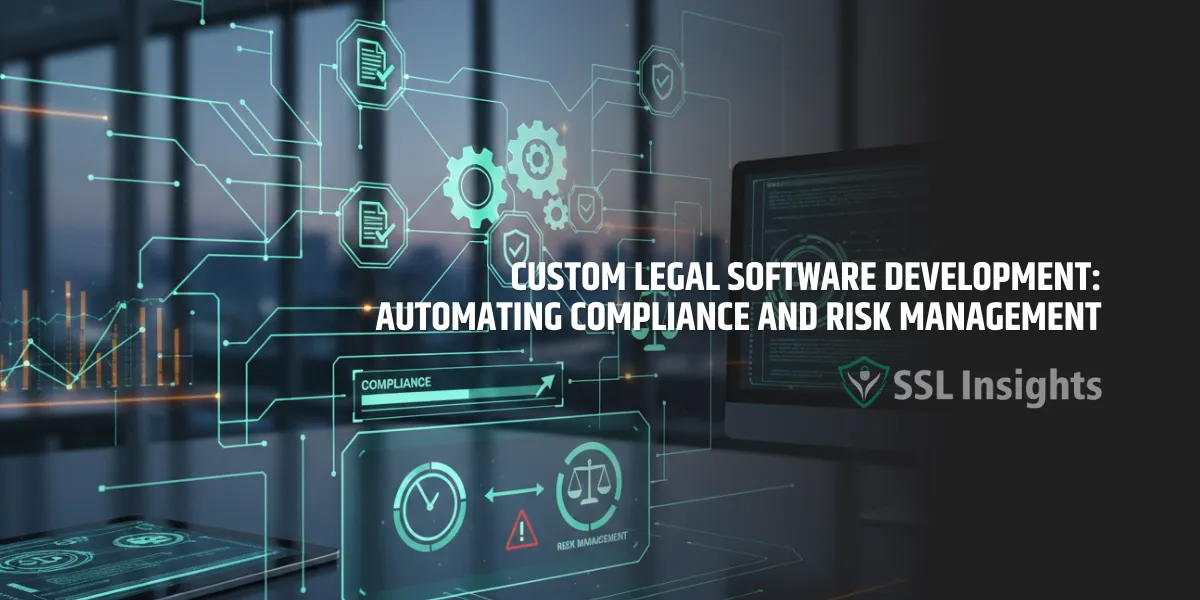
Today’s fast-paced, digitalized business world provides a wide array of options for fast growth and maximizing earnings. However, on the other hand, this abundance of business opportunities available online is balanced by stricter compliance requirements, which are reasonable, in fact. They secure ordinary customers from potential fraud, making commercial relations more predictable and transparent.
Greater transaction volumes make a business data-heavy, while compliance requirements remain the same and are strict to follow. That's why law firms and other companies handling large-scale data require automation and advanced legal software development solutions. The latter ones help process incoming data to the fullest while remaining in strict compliance at the same time.
Still, each business has its own commercial strategies and trade secrets, requiring tailored software solutions as well. In this review, professionals from the custom software development company Lumitech will share their expertise in the field of developing software tailored to the company’s legal needs and business goals. Custom legal tech solutions always make a difference in routine work and financial gains.
What Is Legal Tech Software Development?
Legal software development services refer to the creation of digital tools tailored to the specific needs of legal businesses, from handling routine legal assignments to more complex cases. These are the most common examples:
- Contract lifecycle management systems. These tools help to store, navigate, and work with the legal contracts. The larger the scope of these documents, the more difficult it becomes for a law firm to track them, especially their end dates and crucial legal obligations. On top of that, each legal company has its own contract management specifics, which often determine the need for custom legal software development.
- Compliance management tools. It is another widely used tool that is essential for large law firms, but not only for them. Many other business entities that handle large data volumes and are subject to strict compliance rules also leverage these software solutions. Companies dealing with cryptocurrencies, rendering financial services, or involved in gambling or betting are vivid examples, as they operate in high-risk environments. They also strongly require legal software to automate risk management.
- Legal document automation tools. The era when legal professionals had to draft legal documents by hand is already gone. Even though this approach was considered to be the only possible one, it was extremely prone to mistakes. Now, more law firms are automating their drafting processes, which touch many types of documents, from standardized petitions to pleadings. Even the creation of most contracts can be automated by advanced, custom legal tech solutions, allowing legal professionals to focus on the complicated cases that must be handled manually indeed.
- Case and matter management software. Even one missed submission deadline or other critical aspect may result in severe legal consequences. Advanced legal tech software development solutions help protect legal professionals from reputational damage. When tailored, these solutions can easily address the specifics of the legal business, its routine processes, and signal lawyers about any important deadlines or tasks to do upfront.
These are only the most common examples; a professional legal software development company can create custom tools tailored to the specifics of each legal business. Not all commercial and legal secrets regarding internal processes and practices can be discussed or disclosed, even in part. If you have issues of this kind or simply want to make your daily life easier, request a quote for a professional consultation.
Benefits of Custom Legal Software Development
Integrating custom software solutions provides numerous benefits of custom compliance for law firms:
- Less paperwork. Almost any document in a law firm can be converted into digital form. From intake to archiving, custom legal tech solutions make a meaningful difference in how the company operates, freeing legal professionals to focus on more complex problem-solving or other high-value work.
- Monitoring and automation. Real-time, accurate analytics is essential in the legal field. However, compliance is one of the most resource-intensive aspects of legal work. Manual tracking is sometimes impossible and surely not necessary when routine processes are automated and thoroughly monitored in line with the given parameters. This advancement will not only help to prevent considerable fines but will also streamline daily operations, including throughout these measures:
- Monitoring legal and regulatory updates;
- Setting alerts to identify risks on time;
- Automating audit and reporting;
- Standardizing compliance work across multiple interested teams.
- Security and scalability. Effective legal software development services are impossible without ensuring sufficient security and scalability, as the business grows. The advanced end-to-end encryption and two-factor authentication are only the must-have features. As the business and data volumes it handles expand, custom legal tech solutions address the growing needs accordingly.
- Cost decreases. Less paperwork and mistakes not only streamlines operations but also reduces operational costs. Automated analytics also allows lawyers to process data more accurately without incurring and charging the numerous hours of expensive, manual work.
Tailored Legal Software Development Services by Niche
Beyond personalized solutions, custom legal software development can be adapted to diverse niches within the legal profession:
- Law firms. Advanced legal tech software development can fully address the specifics of each practice, ensuring easier, unified case tracking, accurate, timely billing, and handling various client management issues, to mention a few.
- Compliance teams. Risk management is crucial in this case, while its automation goes far beyond convenience solely. The data-heavy business often finds automation the single feasible option for regular, consistent work. Anti-money laundering (AML), Know Your Customer (KYC), GDPR (General Data Protection Regulation) compliance, and identifying Politically Exposed Persons (PEP) are the most common areas where businesses need legal software to automate risk management. There are also other niche-specific issues, such as complying with responsible gaming practices, for instance, by seamlessly integrating red flags into the system to prevent serious compliance breaches and associated fines.
- In-house departments. Enterprise-grade tools greatly ease the day-to-day work of in-house legal counsels, allowing them to obtain first-hand data from different sources and make more effective legal decisions that affect the business and its performance metrics.
- LegalTech startups. From advanced legal analysis powered by AI to more sophisticated features, introducing innovations, custom legal tech solutions can help new companies gain competitive advantages and stronger market positions.
- Notaries. Legal software development services revolutionize how notaries render their services. For example, e-Signature platforms greatly facilitate registration tasks. Another example is the integration of blockchain solutions that bolster security.
Lumitech Software: Expert Management of Everyday Legal Challenges!
Legal professionals who are tired of wasting countless hours on expensive, routine work may easily integrate custom legal tech solutions. These tools ensure a wide array of advantages: streamline workflows, carry out accurate, secure data management, and identify most meaningful trends, to mention a few.
If you need workable solutions, reach experienced developers from Lumitech, a reputable legal software development company. Professionals will develop for you the tools that can optimize your performance, ensure overall compliance, and reduce costs!

Priya Mervana
 Verified Web Security Experts

Priya Mervana is working at SSLInsights.com as a web security expert with over 10 years of experience writing about encryption, SSL certificates, and online privacy. She aims to make complex security topics easily understandable for everyday internet users.