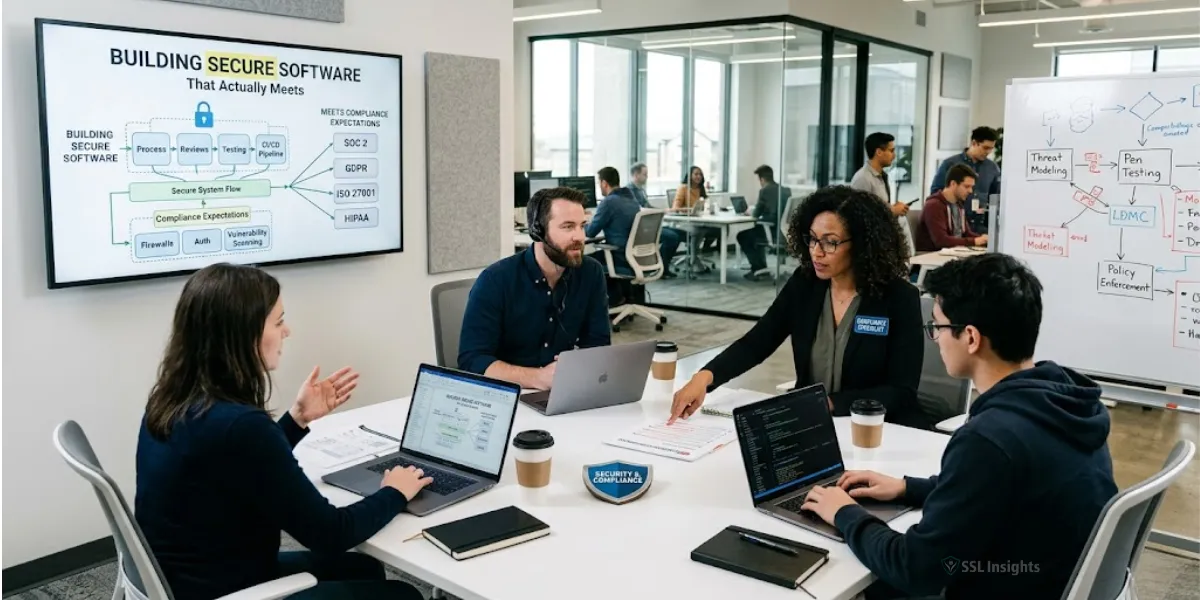
For most developers, compliance can feel like a distant concern - something handled by legal or security teams after the product is built. But that approach doesn’t hold up anymore. Today, security and compliance expectations are built directly into how software is designed, developed, and deployed.
If you’re building a SaaS product, aligning with frameworks like SOC 2 requirements isn’t just about passing an audit. It’s about showing that your engineering practices are reliable, secure, and repeatable.
The good news is that many engineering teams are already doing a large part of this work.
Your Existing Workflow Already Supports Compliance
Think about your current workflow. You likely use version control systems like Git, enforce pull request reviews, manage access through tools like AWS IAM or Google Workspace, and deploy through CI/CD pipelines. These are not just good development practices - they directly support compliance expectations.
The gap is usually not in implementation, but in structure.
How Everyday Practices Map to Compliance Controls
Here are some direct examples of how your current engineering habits align with compliance requirements:
- Pull request reviews before merging = Change Management Control
- Restricted and logged access to production = Access Control
- Logs stored and monitored via CloudWatch or similar = Monitoring & Auditability
The Documentation Gap: Where Teams Fall Short
Compliance frameworks expect these activities to be defined, documented, and consistently followed - not just informally practiced. This is where many teams run into issues.
A well-written policy that explains how changes are approved, how access is granted and revoked, and how incidents are handled turns everyday engineering work into audit-ready evidence. Without that layer, even strong technical practices can fall short during an audit.
Embedding Security and Compliance Ownership Within Engineering
In strong engineering teams, security is not a separate function - it is embedded within engineering. Developers naturally own parts of compliance because they own the systems.
Defining clear accountability - who reviews access permissions every quarter, who approves production deployments, or who responds to incidents - creates clarity and reduces friction when it is time to demonstrate compliance.
The Role of Automation in Compliance
Automation can help, but it is not the full answer.
Tools can pull logs, track configurations, and monitor changes - and they are useful for evidence collection. But they cannot replace the human judgment required for risk assessments, vendor evaluations, or incident handling decisions. Automation should support your processes, not define them.
This is where platforms like SOCLY.io fit in - not as a replacement for engineering processes, but as a way to organize and streamline them. By mapping existing workflows into structured controls and helping teams track evidence over time, such platforms reduce the overhead that usually comes with compliance efforts.
Incident Response Readiness
Why Monitoring Alone Is Not Enough
Incident response readiness is one area developers often underestimate. It is not enough to have monitoring in place. You need a defined process for what happens when something goes wrong:
- Who gets alerted first
- How incidents are classified
- How communication is handled internally and externally
Even a simple, well-documented playbook can make a significant difference during both real incidents and audits.
Data Handling and Security Best Practices
Protecting Sensitive Data at Every Layer
Data handling practices are becoming increasingly important for compliance. Developers should be aware of where sensitive data is stored, how it is encrypted, and who has access to it. Key measures include:
- Enforcing encryption at rest and in transit
- Rotating credentials regularly
- Limiting access permissions to only what is necessary
Ensuring Consistency Across Environments
Development, staging, and production should follow similar security and access patterns. Many compliance gaps come from production being tightly controlled while lower environments are left open. Auditors often look for this consistency as a sign of maturity.
Getting Started: Building Compliance Into Your Development Process
Practical Steps for Developer Teams
From a developer’s perspective, the goal is not to do compliance as a separate activity - it is to build systems in a way that naturally meets compliance expectations. Here’s where to start:
- Start small - document what you already do
- Add lightweight reviews where needed
- Ensure logs are retained and accessible
- Define ownership clearly across your team
Over time, these practices build into a system that is not only compliant but also more reliable and easier to scale.
Compliance as a Development Accelerator
In the end, when done right, compliance does not slow development - it improves it. By treating compliance as a natural extension of good engineering practice, your team builds systems that are secure, trustworthy, and ready to scale with confidence.